Energy Consumption and Efficiency Optimization in Freeze Drying of Fruits and Vegetables: A Review
DOI:
https://doi.org/10.15294/joct.v2i1.28102Keywords:
Freeze Drying, Fruit, Vegetable, Energy Consumption, Efficiency OptimizationAbstract
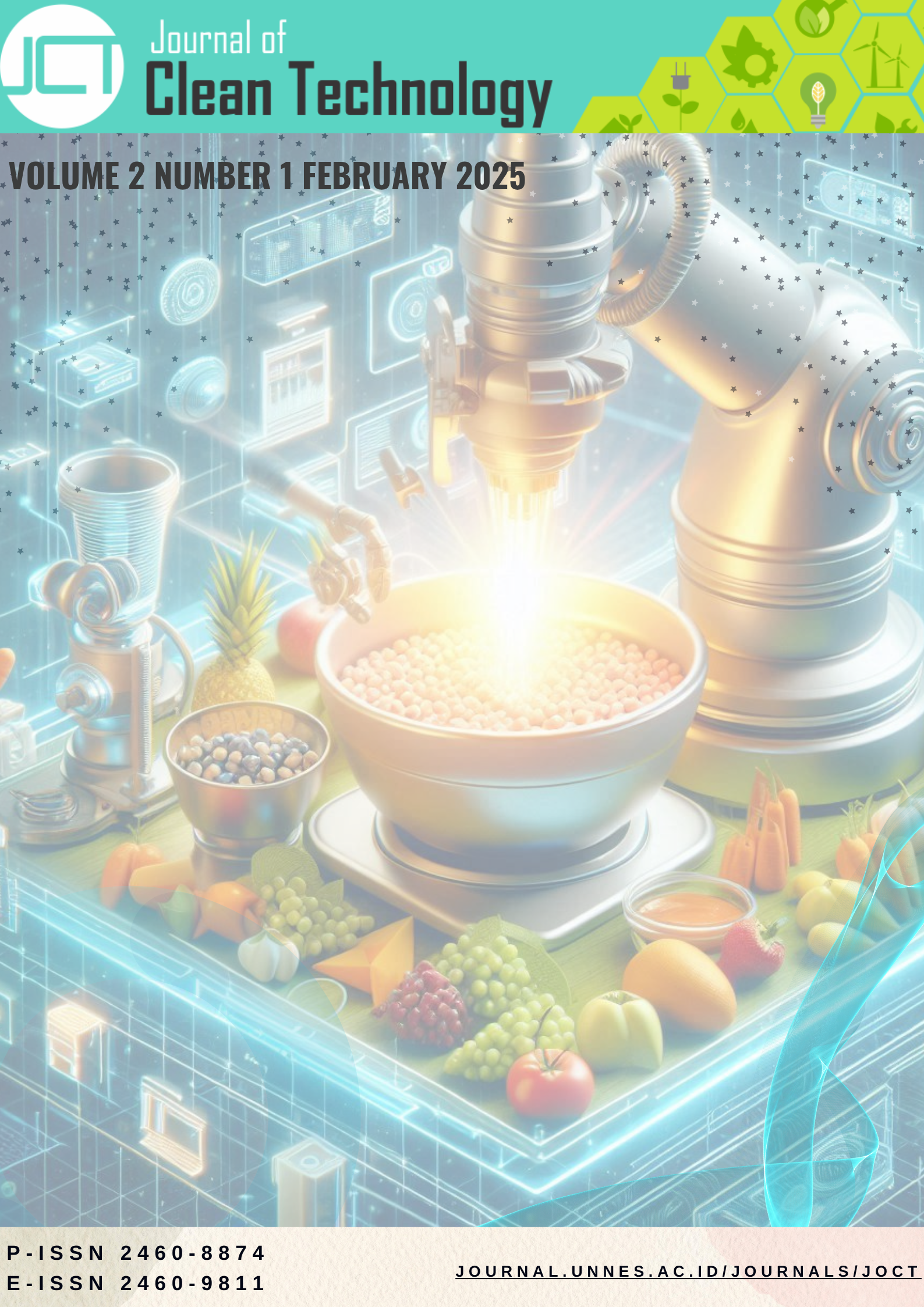
Fruits and vegetables are essential for global nutrition and economic growth, yet they are among the most perishable food commodities, contributing to major postharvest losses worldwide. Freeze drying is widely recognized as a superior preservation method that maintains the structural integrity, nutritional value, and sensory quality of fresh produce. Despite its advantages, freeze drying is energy-intensive, posing challenges for cost-effectiveness and sustainability in large-scale applications. This review explores the freeze drying process in detail, highlighting the critical operational parameters such as freezing rate, chamber pressure, shelf temperature, and sample thickness, that influence both product quality and energy consumption. Additionally, the role of cryoprotectants in preserving bioactive compounds during drying is discussed. By identifying optimization strategies for these parameters, this study aims to support the development of more energy-efficient and economically viable freeze drying systems for the fruit and vegetable processing industry.
Downloads
Published
Article ID
28102Issue
Section
License
Copyright (c) 2025 Kirana Maharani Zudana, Fitri Wahyuni, Sheila Azzahra Putri, Yuniar Nanda Lestari (Author)

This work is licensed under a Creative Commons Attribution-NonCommercial-NoDerivatives 4.0 International License.
All articles published in The Journal of Clean Technology (JoCT) are licensed under the Creative Commons Attribution-NonCommercial-NoDerivatives 4.0 International License (CC BY-NC-ND 4.0).
Under this license, readers are free to share, copy, and redistribute the material in any medium or format for non-commercial purposes, provided that the following terms are met:
-
Attribution: Proper credit must be given to the original author(s) and source, including a link to the license and an indication of any changes made (if applicable).
-
NonCommercial: The material may not be used for commercial purposes.
-
NoDerivatives: If the material is remixed, transformed, or built upon, the modified material may not be distributed.
The full license terms can be viewed at: https://creativecommons.org/licenses/by-nc-nd/4.0/
Authors retain the copyright of their articles and grant The Journal of Clean Technology the right of first publication with the work simultaneously licensed under this Creative Commons license.