Archives
-
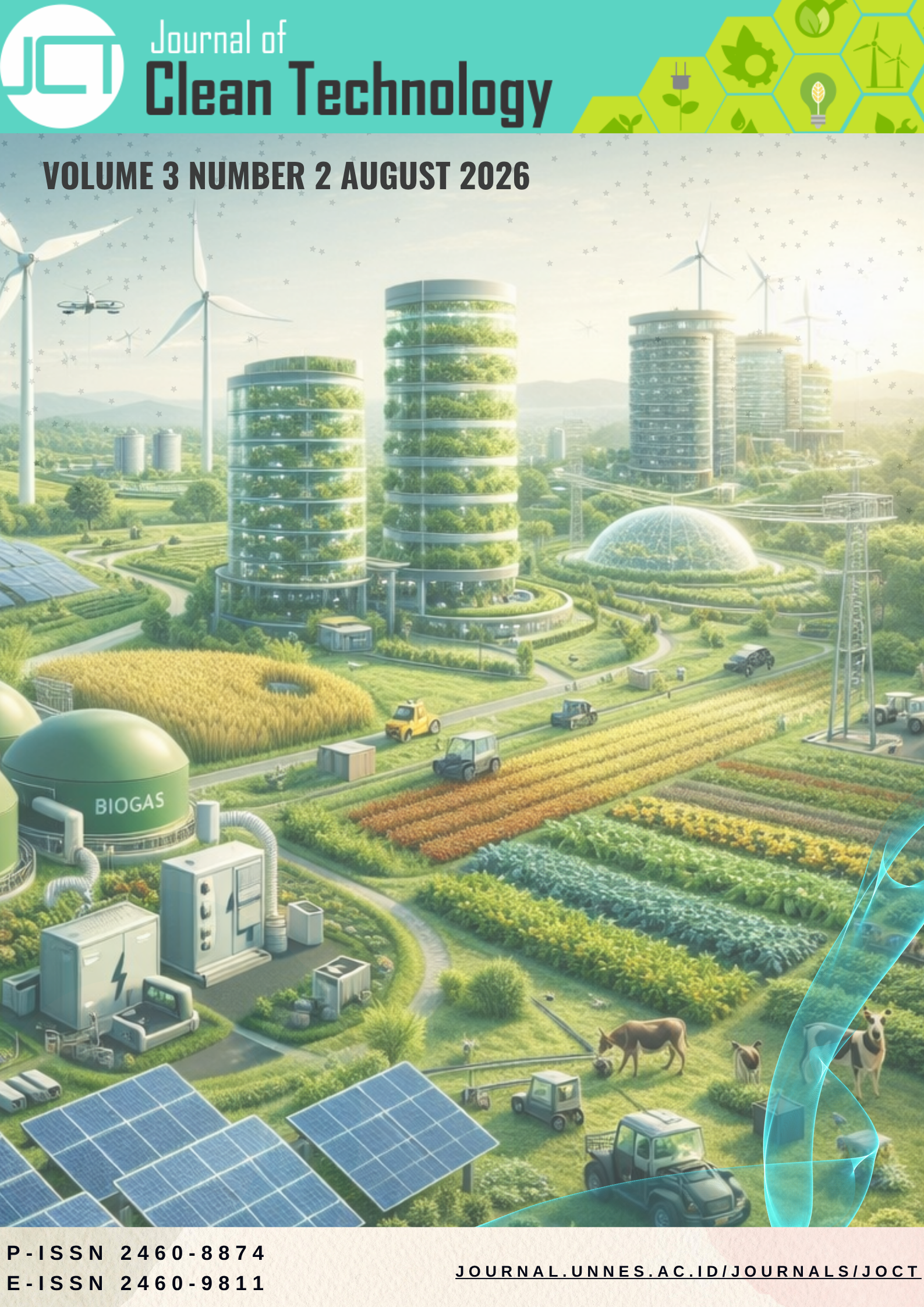
August 2026
Vol. 3 No. 2 (2026)Volume 3, Issue 2 of the Journal of Clean Technology presents research and review articles on sustainable resource utilization, clean technology innovation, and circular economy practices, featuring contributions from authors affiliated with institutions in Indonesia, Turkey, Nigeria, India, Ethiopia, and South Africa. The articles explore rice husk-derived materials for solar-driven water evaporation, coconut shell liquid smoke as a sustainable fish preservative, and conductive polymers for enhancing bioelectricity generation in microbial fuel cells.
Furthermore, this issue examines the commercialization of coffee by-products in Ethiopia and proposes a circular economy framework for scaling waste-to-wealth ventures in emerging markets. Collectively, these contributions highlight innovative approaches to agricultural waste valorization, renewable energy, sustainable materials, and technology commercialization to address environmental challenges and promote sustainable economic growth.
-
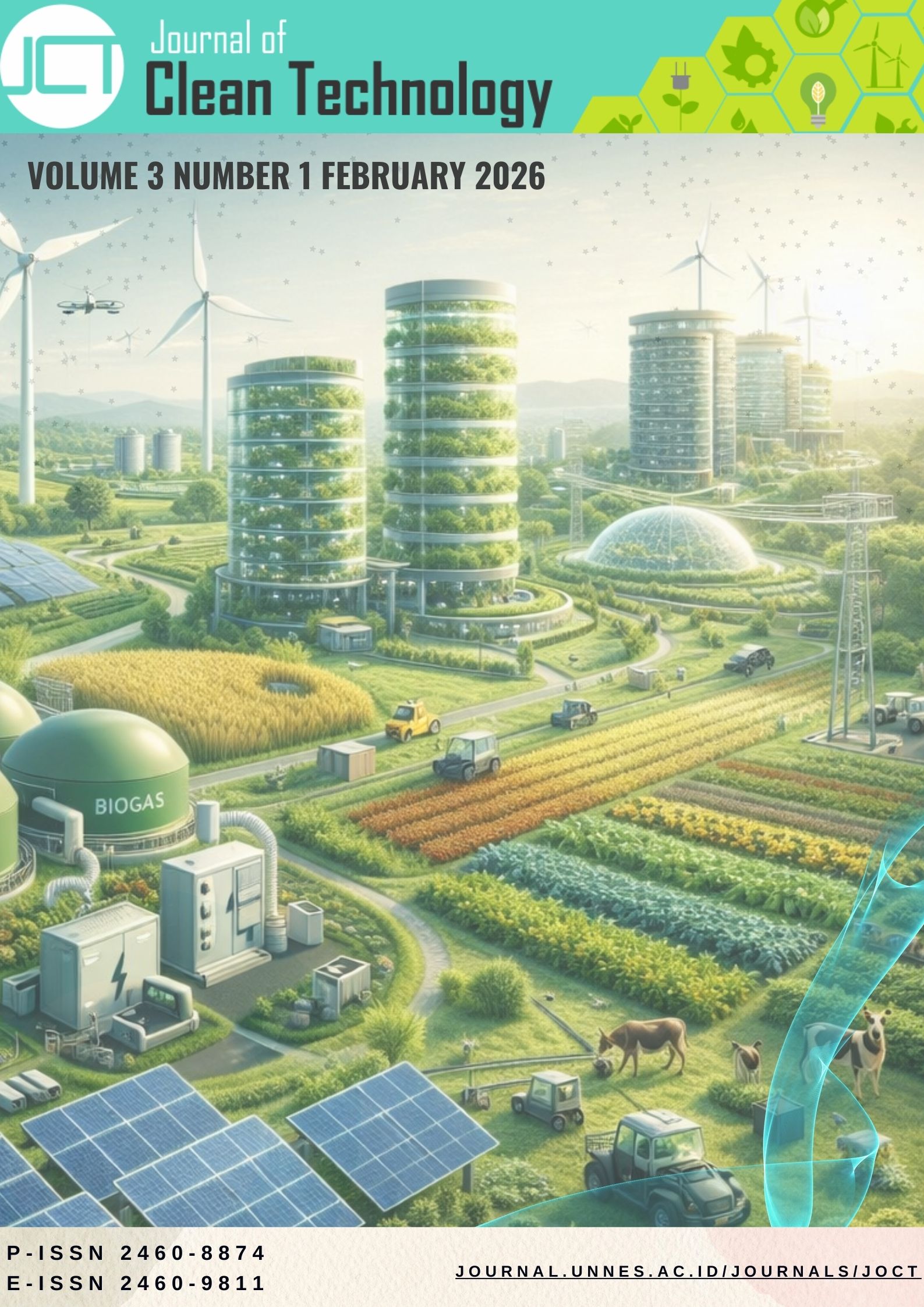
February 2026
Vol. 3 No. 1 (2026)Volume 3 Issue 1 of the Journal of Clean Technology presents a collection of research and review articles addressing recent developments in sustainable resource utilization, waste valorization, and renewable energy technologies. The articles in this issue explore innovative approaches to transforming agricultural and industrial waste into valuable products such as bioenergy, organic fertilizers, and nutraceutical ingredients.
Contributions include studies on microbial fuel cell technology for electricity generation from fish processing wastewater, bioconversion of Carica waste into liquid organic fertilizer for sustainable agriculture, and physicochemical characterization of oil palm leaf extract for green nutraceutical applications. In addition, this issue presents a comprehensive review of nutrient recovery technologies from palm oil mill effluent (POME) for fertilizer production and an analysis of chronological innovations in biodigester design technology in Ethiopia.
Collectively, these studies highlight the integration of clean technology, circular economy principles, and bioresource utilization to address environmental challenges while promoting sustainable energy and agricultural productivity.