Self-Immobilization of Rhizopus oligosporus on Shrimp Shell Chitin Matrix for Troso Fabric Dyeing Wastewater Adsorption
DOI:
https://doi.org/10.15294/unnesjlifesci.v15.i1.41718Keywords:
Adsorption, Biosorbent, Chitin, Immobilization, Textile waste, Rhizopus oligosporusAbstract
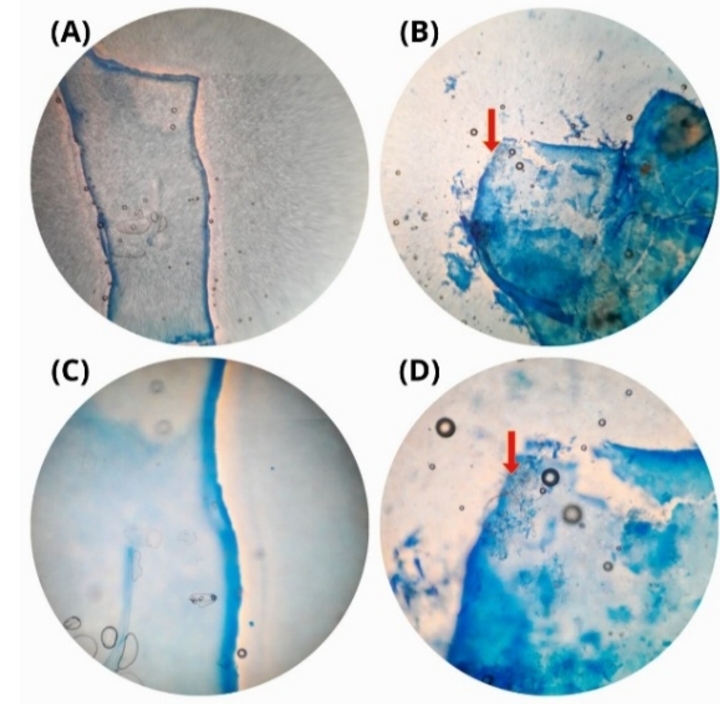
The Troso fabric industry in Indonesia contributes significantly to the national economy but also produces liquid waste containing chemical dyes. Liquid waste from the Troso weaving industry exceeds wastewater quality standards, including BOD, COD, and pH, and can pollute the environment if not managed properly. Chemical and physical methods for wastewater removal in dyeing have already been used, but still have limitations, such as being expensive and causing environmental side effects. Therefore, the biological method is preferred to overcome these problems. The present study aims to develop a Rhizopus oligosporus mycelium immobilization system using chitin from shrimp shells and to test its adsorption capacity for removing a dye agent (direct yellow) from Troso fabric dye-contaminated wastewater. The immobilization was performed using both solid-state and submerged techniques in potato dextrose broth (PDB). The one-factor-at-a-time (OFAT) method was used to determine the optimal pH and the optimal number of biosorbents for efficient dye removal. The results showed that the optimal immobilization system was the solid-state technique, which yielded a well-developed hyphal structure on the chitin surface with a cell-loading capacity (CLC) of 1.19 gbiomass/gmatrix. In the adsorption capacity (qe) assay, the results showed that pH 7.0 and 3 bio-balls application provided the highest adsorption capacity of 122.608 mg/g and 64.73% color removal. This study shows the potential use of immobilized chitin as a biosorbent for effectively treating textile wastewater.
Downloads
References
Andriani, P., & Irdawati, I. (2025). Characterization of alginate beads from biolectric producing thermophilic bacterial cells. Jurnal Biologi Tropis, 25(2), 1502–1507. https://doi.org/10.29303/JBT.V25I2.8828
Anisah, N. N., & Na’am, M. F. (2021). Eksistensi tenun Troso Jepara di antara berdirinya perusahaan-perusahaan garmen. TEKNOBUGA: Jurnal Teknologi Busana dan Boga, 9(2), 148–154. https://doi.org/10.15294/teknobuga.v9i2.27221
Arummidah, S. (2023). Pengaruh penambahan tripolifosfat dan epiklorohidrin pada butiran kitosan serta ph larutan terhadap adsorpsi Procion Red MX 8B. [Skripsi, Universitas Islam Negeri Maulana Malik Ibrahim]. E-Theses UIN Maulana Malik Ibrahim. http://etheses.uin-malang.ac.id/id/eprint/58250
Aznur, B. S., Nisa, S. K., & Septriono, W. A. (2022). Agen biologis potensial untuk bioremediasi logam berat potential biological agents for heavy metal bioremediation. Jurnal Maiyah, 1(4), 186–198. https://www.academia.edu/download/106670361/3561.pdf
Bagchi, M., Bera, D., Chemical, S. A.-I. J. of, & 2022. (2022). Adsorptive column studies for removal of Reactive Blue 4 dye using dry cells of Rhizopus oryzae (MTCC 262). Indian Journal of Chemical Technology (IJCT), 29, 511–518. https://doi.org/10.56042/ijct.v29i5.53698
Barrios-González, J. (2012). Solid-state fermentation: Physiology of solid medium, its molecular basis and applications. Process Biochemistry, 47(2), 175–185. https://doi.org/10.1016/j.procbio.2011.11.016
Bukhari, M. R. (2022). Pelatihan fermentasi tempe. BARAKATI: Journal of Community Service, 1(1) 10-14. https://ejournal.sangadjimediapublishing.id/index.php/barakati/article/view/25/40.
Dwiyanti, D., & Kuswytasari, N. D. (2016). Imobilisasi enzim ligninolitik kapang tanah pada bentonit. Jurnal Sains dan Seni ITS, 5(2), 77–82. https://doi.org/10.12962/j23373520.v5i2.20793
Fabbricino, M., & Pontoni, L. (2016). Use of non-treated shrimp-shells for textile dye removal from wastewater. Journal of Environmental Chemical Engineering, 4(4), 4100–4106. https://doi.org/10.1016/j.jece.2016.08.028
Fathina, D. S. (2024). Bioremediasi logam timbal (Pb) menggunakan bakteri indigenous tanah TPA Piyungan pada air limbah industri tekstil. Jurnal Teknik, UII, 3(2), 1–79. https://dspace.uii.ac.id/handle/123456789/51580.
Fibriana, F., Bahatmaka, A., Imani, N. A. C., Kusumaningtyas, R. D., Juliadi, I. A., Pradana, B. A., & Wafiroh, H. (2025). Innovative Bio ball system: immobilized Rhizopus oligosporus F-05 for effective odor and color removal in pharmaceutical industry wastewater. Water, Air, & Soil Pollution 2025 236:12, 236(12), 763-. https://doi.org/10.1007/S11270-025-08414-Z
Khairi, S., Wijoyo, R. B. T., Radhiansyah, L. Y., Belanisa, T., & Rezeki, S. (2025). Chitosan preparation from white shrimp shell (Litopenaeus vannamei) for Fe (III) removal from Pontianak municipal groundwater. Stannum: Jurnal Sains dan Terapan Kimia, 7(1), 14–24. https://doi.org/10.33019/jstk.v7i1.5566
Latip, M. A. A., Nordin, N. F. H., Alias, S. A., Smykla, J., Yusof, F., & Mohamad, M. A. N. (2023). The optimization of growth condition of the bacteria producing cold-active proteolytic enzyme from the antarctic region. IIUM Engineering Journal, 24(1), 27–39. https://doi.org/10.31436/iiumej.v24i1.2447
Liu, D., Yang, X., Zhang, L., Tang, Y., He, H., Liang, M., Tu, Z., & Zhu, H. (2022). Immobilization of biomass materials for removal of refractory organic pollutants from wastewater. International Journal of Environmental Research and Public Health, 19(21). Artikel 13830. https://doi.org/10.3390/ijerph192113830
Mahatmanti, F. W., Kusumastuti, E., Jumaeri, J., Sulistyani, M., Susiyanti, A., Haryati, U., & Dirgantari, P. S. (2022). Pembuatan kitin dan kitosan dari limbah cangkang udang sebagai upaya memanfaatkan limbah menjadi material maju. Inovasi Kimia, 1, 1–38. https://doi.org/10.15294/ik.v1i1.60
Mulyadi, A., Abi Supandi, G., & Ibrahim, Y. (2022). Uji kandungan beberapa unsur logam berat pada air irigasi, tanah dan sayuran kangkung (Ipomoea aquatica Forsk) di Kawasan Industri Kecamatan Margaasih. Journal Unpas, 7(2). https://journal.unpas.ac.id/index.php/biosfer/article/view/6820
Muthu, S. S., & Khadir, A. (2021). Advanced removal techniques for dye-containing wastewaters. https://link.springer.com/content/pdf/10.1007/978-981-16-3164-1.pdf
Nugraini, B., Syahra, W. A., & Suprapto, N. S. (2022). Kelomagic moringa seed powder sebagai upaya penjernihan air limbah Sungai Troso Jepara. Lomba Karya Tulis Ilmiah, 311–320. https://journal.ittelkom-sby.ac.id/lkti/article/view/301
Ogawa, M., Moreno-García, J., & Barzee, T. J. (2024). Filamentous fungal pellets as versatile platforms for cell immobilization: developments to date and future perspectives. Microbial Cell Factories, 23(1). https://doi.org/10.1186/S12934-024-02554-3
Pandey, A. (2003). Solid-state fermentation. Elsevier, 13, 81–84. https://www.sciencedirect.com/science/article/pii/S1369703X02001213
Purwaningrum, S. I. (2024). Analisis pengelolaan air limbah batik sebagai upaya penerapan produksi bersih Kota Jambi. Jurnal Pembangunan Berkelanjutan, 7(1), 45–55.https://doi.org/10.22437/jpb.v7i2.38203
Purwaningsih, D. Y., Wulandari, I. A., & Aditya, W. (2017). Pemanfaatan cangkang telur ayam sebagai biosorben untuk penurunan COD pada limbah cair pabrik batik. Seminar Nasional Teknologi Industri Berkelanjutan I (SENASTITAN I), 507–512. http://ejurnal.itats.ac.id/senastitan/article/view/1686
Putri, B. I. (2024). Preparasi hidrochar makroalga Eucheuma cottonii dan uji selektivitasnya sebagai adsorben zat warna anionik. {Skripsi, Universitas Sriwijaya]. Universitas Sriwijaya Repository. http://repository.unsri.ac.id/id/eprint/166813
Rachel, N. & Hanifa, M. (2025). Analisis dampak kenaikan tarif impor Amerika Serikat terhadap ekspor industri tekstil di Indonesia. Jurnal Akademik Ekonomi dan Manajemen, 2(2), 239–256. https://doi.org/10.61722/jaem.v2i2.4930
Rahmaniah, G. (2019). Biosorpsi zat warna Remazol Brilliant Violet oleh Trichoderma viride yang diamobilisasi dengan Ca-alginat. [Skripsi, Universitas Brawijaya]. Repository Universitas Brawijaya. http://repository.ub.ac.id/176854/
Rahmayanti, P. (2006). Optimasi pH dan waktu kontak biosorpsi zat warna Remazol Yellow oleh biomassa Rhizopus oryzae aktif dan terimmobilisasi. [Skripsi, Universitas Sebelas Maret]. Repository UNS. https://digilib.uns.ac.id/dokumen/detail/11598
Widianita, D. R. (2023). Pengaruh penambahan ragi tempe premium terhadap sifat sensori tempe. AT-TAWASSUTH: Jurnal Ekonomi Islam, VIII(I), 1–19.
Rohmah, A. A., Purnomo, A. S., & Safitri, W. N. (2022). Biodecolorization of methylene blue by using Bacillus subtilis immobilized into sa-pva-bentonite matrix in mineral salt medium and non-nutritious medium. Indonesian Journal of Chemistry, 22(6), 1637–1650. https://doi.org/10.22146/ijc.76080
Salvi, N. A., & Chattopadhyay, S. (2017). Biosorption of Azo dyes by spent Rhizopus arrhizus biomass. ApWS, 7(6), 3041–3054. https://doi.org/10.1007/S13201-016-0417-0
Saraf, S., & Vaidya, V. K. (2016). Statistical optimization of biosorption of reactive dyes by Rhizopus arrhizus NCIM 997 immobilized in calcium alginate. IJISET, 3. https://www.ijiset.com/vol3/v3s6/IJISET_V3_I6_91.pdf
Saraf, S., & Vaidya, V. K. (2017). Application of response surface methodology for biosorption of reactive dyes from textile effluent using dead fungal biomass of Rhizopus arrhizus NCIM 997. International Journal of Latest Technology in Engineering, VI. www.ijltemas.in tambahkan volume, nomor, halaman. URL (jika tersedia)
Sitohang, R. G., Turnip, N. J. R., & Aditia, A. (2022). Optimasi proses adsorpsi zat warna indigosol di air limbah artifisial menggunakan response surface methodology dengan pendekatan desirability function. Jurnal Rekayasa Proses, 16(2), 60. https://doi.org/10.22146/jrekpros.72318
Utami, W. (2024). Pengolahan limbah zat warna batik di perairan: SLR. JSSIT: Jurnal Sains dan Sains Terapan, 2(2). https://doi.org/10.30631/jssit.v2i2.61
Waruwu, M., Natijatulpùat, S., Utami, P. R., Yanti, E., & Rusydiana, M. (2025). Metode penelitian kuantitatif: Konsep, jenis, tahapan dan kelebihan. Jurnal Ilmiah Profesi Pendidikan, 10(1), 917–932. https://doi.org/10.29303/jipp.v10i1.3057
Wijayanti, I. E., Kurniawati, E. A., & Solfarina, S. (2019). Studi kinetika adsorpsi isoterm persamaan langmuir dan freundlich pada abu gosok sebagai adsorben. EduChemia: Jurnal Kimia dan Pendidikan, 4(2), 175–184. https://doi.org/10.30870/EDUCHEMIA.V4I2.6119.G4563