Pengaruh Lama Penyimpanan Biji Kopi Liberika pada Suhu Kamar terhadap Mutu Mikrobiologis dan Kadar Okratoksin A
The Effect of Storage Time of Liberica Coffee Beans at Room Temperature on Microbiological Quality and Ochratoxin A Levels
DOI:
https://doi.org/10.15294/unnesjlifesci.v14.i1.5810Keywords:
Liberica coffee beans, Microbiology, Ochratoxin AAbstract
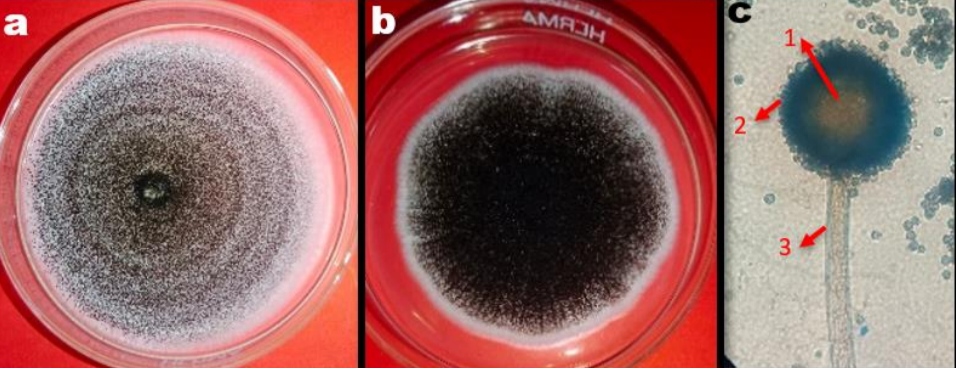
Liberica coffee is one of the leading commodities in several regions so it has quite high economic potential. Coffee beans can be stored for quite a long time, more than one year, even more than 4 years before going through the roasting process. However, during long storage periods coffee beans can be attacked by microorganisms such as mold (ochratoxigenic and non-ochratoxigenic). This research aims to determine the effect of storage time on the quality of Liberica coffee beans, both microbiologically and chemically. The benefit of this research is to provide information on the quality of Liberica coffee beans. This research is a laboratory experimental research. The long storage time for coffee beans was 36 and 39 weeks. The results of the research showed that the yeast mold rate (AKK) on Liberica coffee beans stored for 39 weeks was greater than those stored for 36 weeks. The increase in AKK during storage is thought to be due to the presence of insects, temperature and humidity factors. A total of three mold isolates were found at week 36 and there were six mold isolates at week 39. The percentage of fungal isolate attacks at both weeks 36 and 39 was dominated by fungi of the Mucorales order (Mucor sp. and Absidia sp.). In the 36th week the attack of Mucor sp. amounted to 36.67% while in the 39th week the Mucor sp attack. 20%. and Absidia sp. 23.33%. Ochratoxin A (OTA) levels from week 36 to week 39 did not increase but instead decreased. This occurs due to OTA degradation by ochratoxin-degrading molds which are thought to be Aspergillus sp. during storage.
Downloads
References
Badan Pengawas Obat Dan Manakanan [Bpom]. 2019. Peraturan Badan Pengawas Obat dan Makanan Nomor 13 Tahun 2019 tentang batas maksimal cemaran mikroba dalam pangan olahan [ Regulation of POM Agency number 13 of 2019 maximum limits of microbial contamination in processed food]. Jakarta (Id). Badan Pom Republik Indonesia
Bejaoui, H., Mathieu, F., Taillandier, P., & Lebrihi, A. (2006). Biodegradation of ochratoxin A by Aspergillus section Nigri species isolated from French grapes: a potential means of ochratoxin A decontamination in grape juices and musts. FEMS microbiology letters, 255(2), 203-208. https://doi.org/10.1111/j.1574-6968.2005.00073.x
Błaszkiewicz, J., Nowakowska-Bogdan, E., Barabosz, K., Kulesza, R., Dresler, E., Woszczyński, P., ... & Szkutnik, K. (2023). Effect of green and roasted coffee storage conditions on selected characteristic quality parameters. Scientific Reports, 13(1), 6447. https://doi.org/10.1038/s41598-023-33609-x
Budiman, H. 2012. Prospek Tinggi Bertanam Kopi. Pustaka Baru Press.Yogyakarta.
Casas-Junco, P. P., Ragazzo-Sánchez, J. A., Ascencio-Valle, F. D. J., & Calderón-Santoyo, M. (2018). Determination of potentially mycotoxigenic fungi in coffee (Coffea arabica L.) from Nayarit. Food science and biotechnology, 27(3), 891-898. https://doi.org/10.1007/s10068-017-0288-7
Cheng B, Furtado A, Smyth HE, Henry RJ. 2016. Influence of genotype and environment on coffee quality. Trends Food Sci Technol 57: 20-30. https://doi.org/10.1016/j.tifs.2016.09.003.
Dharmaputra, O., S., Ambarwati, S., Retnowati, I. Nurfadila, N. 2019. Fungal infection of stored arabica coffee (Coffee arabica) beans in south Sulawesi province, Indonesia. Biotropia, 26 (2), 127-135.
Fitriyah, A. T., Kape, D., Baharuddin., Dan Utami, R. R. 2021. Analisis Mutu Organoleptik Kopi Bubuk Arabika (Coffea arabica) Bittuang Toraja. Jurnal Industri Hasil Perkebunan, 16(1):72-82.
Fuchs, R., & Peraica, M. (2005). Ochratoxin A in human kidney diseases. Food Additives and Contaminants, 22(1), 53–57. https://doi.org/10.1080/02652030500309368
Girma, B. (2023). The Impact of Climate Change on Coffee Processing: A Review. Science Publishing Group. 12(4): 120-129. https://doi.org/10.11648/j.aff.20231204.14
Herlinda, S. Al, Mawardhi, A. D., Setiadi, D., Riset, P. T., Nusantara, P., Tengah, B., & Bogor, K. (2018). “Tantangan dan Solusi Pengembangan PAJALE dan Kelapa Sawit Generasi Kedua (Replanting) di Lahan Suboptimal” Strategi Pemanfaatan Lahan Gambut melalui Pengembangan Agroforestri Kopi Liberika (Coffea liberica) Strategy on Peatland Utilisaton through Development of Coffea Liberica Agroforestry. [Unsri Press].
Hurdeal, V. G., Gentekaki, E., Hyde, K. D., Nguyen, T. T., & Lee, H. B. (2021). Novel Mucor species (Mucoromycetes, Mucoraceae) from northern Thailand. MycoKeys, 84, 57. https://doi.org/10.3897/mycokeys.84.71530
Insanu M., Fidrianny, I., Imtinan, N. H. H, dan Kusmardiyani, S. 2021. Liberica coffee (Coffea liberica L.) from three different regions: In vitro antioxidant activities. Biointerface Res. Appl. Chem, 11(5): 13031–13041. https://doi.org/10.33263/BRIAC115.1303113041
Kembaren, E. T dan Muchsin. 2021. Pengelolaan Pasca Panen Kopi Arabika Gayo Aceh. Jurnal Visioner & Strategis, 10(1):29-36.
Kusumaningrum, H. D dan Rasyidah, M. M. 2019. Prevalence of spoilage mold in coffee before and after brewing. Food Research, 3 (6) : 720 – 726. https://doi.org/10.26656/fr.2017.3(6).142
Lilia, D., Damiri, N., Zulkarnain, M., & Mulawarman. (2021). Short communication: Drying methods and diversity of contaminant fungi on coffee beans in South Ogan Komering Ulu District, South Sumatra, Indonesia. Biodiversitas, 22(2), 1037–1042. https://doi.org/10.13057/biodiv/d220260
Mehrotra RS. 1980. Plant Pathology. Tata Mc.Graw Hill Publishing Company Limited. India.
Muchtar, H., Kamsina, Anova, I. T. 2011. Pengaruh kondisi penyimpanan terhadap pertumbuhan jamur pada gambir. Jurnal Dinamika Penelitian Industri, 22 (1), 36-43.
Maman, M., Sangchote, S., Piasai, O., Leesutthiphonchai, W., Sukorini, H., & Khewkhom, N. (2021). Storage fungi and ochratoxin A associated with arabica coffee bean in postharvest processes in Northern Thailand. Food Control, 130. https://doi.org/10.1016/j.foodcont.2021.108351
Noonim, P., Mahakarnchanakul, W., Nielsen, K. F., Frisvad, J. C., & Samson, R. A. (2008). Isolation, identification and toxigenic potential of ochratoxin A-producing Aspergillus species from coffee beans grown in two regions of Thailand. International journal of food microbiology, 128(2), 197-202. https://doi.org/10.1016/j.ijfoodmicro.2008.08.005
Nurman, N., Susanti, E., & Agia, L. N. (2020). Strategi Peningkatan Daya Saing Kopi Liberika di Kabupaten Kepulauan Meranti. COSTING: Journal of Economic, Business and Accounting, 3(2), 499-505. http://dx.doi.org/10.31539/costing.v3i2.1277
Nurtjahja, K., Hastuti, L., Purnamasari, N., & Silitonga, G. N. (2022). Fungal Contamination and Toxigenicity of Aspergillus flavus on Postharvest Cacao Beans in Northern Sumatera, Indonesia. Yuzuncu Yıl University Journal of Agricultural Sciences, 32(3), 448-454. https://doi.org/10.29133/yyutbd.1071092
Pakshir, K., Dehghani, A., Nouraei, H., Zareshahrabadi, Z., & Zomorodian, K. (2021). Evaluation of fungal contamination and ochratoxin A detection in different types of coffee by HPLC-based method. Journal of Clinical Laboratory Analysis, 35(11). https://doi.org/10.1002/jcla.24001
Pane, A. P., Simarsoit, A. N. S. A., Ashidiqi, C., Carissa, D., Pernanda, M. F., Wulandari, M., & Lindy, N. A. R. Peran teknologi penyimpanan biji kopi dalam meningkatkan ketahanan industri kopi pasca pandemi covid-19 the role of coffee storage technology for improving the resilience of coffee industry post covid-19 pandemic. Prosiding Seminar Nasional BSKJI “Post Pandemic Economy Recovery”
Pitt, J. I., Hocking, A. D. 2009. Fungi and spoilage. New York (US): Springer
Puspita, R., Mz, S., Dewantari Kusumaningrum, H., & Dewanti-Haryadi, R. (2020). Prevalensi Kapang Okratoksigenik dan Kandungan Okratoksin A pada Kopi Selang Semende. Agritech, 40(2), 110-117. https://doi.org/10.22146/agritech.39542
Reddy, L., & Bhoola, K. (2010). Ochratoxins-food contaminants: Impact on human health. In Toxins, 2 (4), 771–779. https://doi.org/10.3390/toxins2040771
Rojas, J. (2004). Green coffee storage. p. 733—749. In : J. N. Wintgens (eds). Coffee : Growing, Processing, Sustainable Production: A Guidebook for Growers, Processors, Traders, and Researchers. Wiley - VCH Verlag GMBH and Co. KGaA. Weinheim.
Retnani, Y., Wigati, D., & Hasjmy, AD (2009). Pengaruh jenis kemasan dan lama penyimpanan terhadap serangan serangga dan sifat fisik ransum broiler starter berbentuk hancur. Jurnal Ilmiah Ilmu-Ilmu Peternakan, 12 (3), 137-145. https://doi.org/10.22437/jiiip.v0i0.176
Standar Nasional Indonesia. 2008. Biji kopi [Coffe beans]. Jakarta (ID): Badan standarisasi Nasional
Standar Nasional Indonesia. 2004. Kopi bubuk. Jakarta (ID): Badan standarisasi Nasional
Standardisasi Nasional Indonesia. 2012. Standar Nasional Indonesia Mikrobiologi Bahan Pangan dan Pakan - Metode Horizontal untuk Enumerasi Kapang dan Khamir Bagian 2: Teknik Penghitungan Koloni pada Produk dengan Aktivitas Air Kurang dari atau sama dengan 0.95. Jakarta (ID): Badan Standarisasi Nasional
Taniwaki, M. H., Teixeira, A. A., Teixeira, A. R. R., Copetti, M. V., & Iamanaka, B. T. (2014). Ochratoxigenic fungi and ochratoxin A in defective coffee beans. Food Research International, 61, 161–166. https://doi.org/10.1016/j.foodres.2013.12.032
Varga, J., Rigó, K., & Téren, J. (2000). Degradation of ochratoxin A by Aspergillus species. International journal of food microbiology, 59(1-2), 1-7. https://doi.org/10.1016/s0168-1605(00)00230-0
Xiao, H., Marquardt, R. R., Abramson, D., & Frohlich, A. A. (1996). Metabolites of ochratoxins in rat urine and in a culture of Aspergillus ochraceus. Applied and Environmental Microbiology, 62(2), 648-655. https://doi.org/10.1128/aem.62.2.648-655.1996
Zhang B.J. 2016. Occurrence regularity and prevention-control measures of Mucor on production of Lentinus edodes. North. Hortic, 19:208–209.